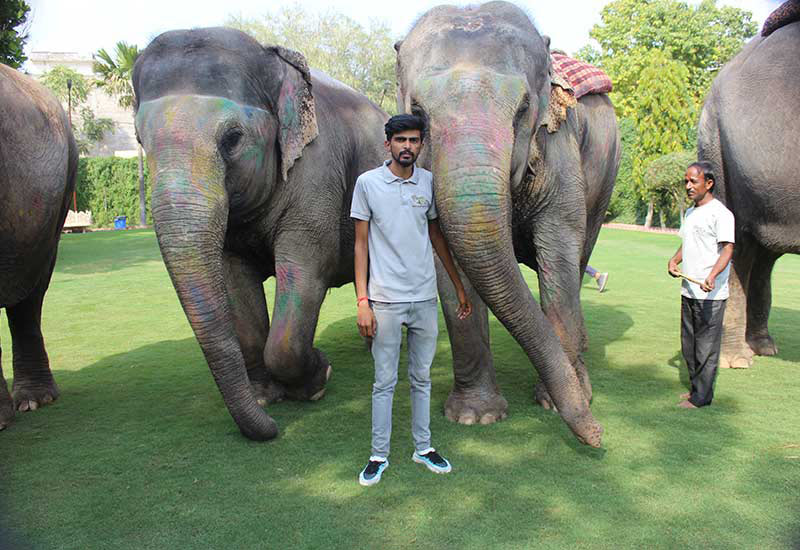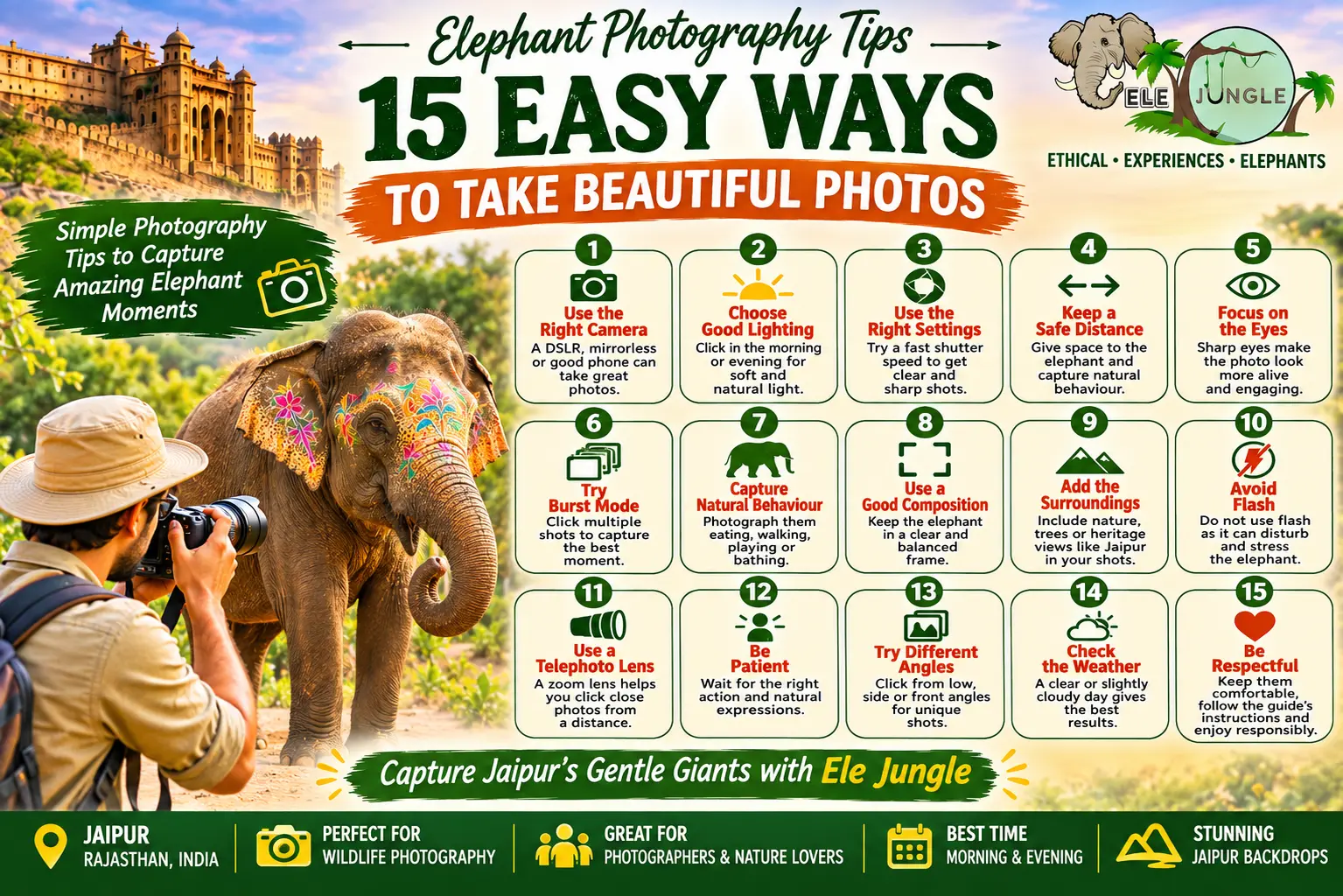
Elephants are beautiful animals. Their big ears, long trunks, gentle eyes and unique movements make them wonderful subjects for photography. Whether you use a mobile phone or a professional camera, you can capture amazing elephant pictures with a little practice.
But taking a good elephant photo is not only about having an expensive camera. You also need good light, the right angle, patience and an understanding of elephant behaviour.
If you are visiting Jaipur and planning an elephant experience, these photography tips will help you save beautiful memories. At Ele Jungle, visitors can learn how to enjoy their elephant experience while respecting the comfort and space of these amazing animals.
In this guide, we will share 15 easy elephant photography tips, useful camera settings, smartphone tricks and ethical photography advice.
What Are the Best Photography Tips for Capturing Beautiful Elephant Moments?
The best way to capture beautiful elephant photos is to use natural light, choose a clear background, focus on the elephant's eyes and wait for natural moments. Keep a safe distance, avoid flash and never force an elephant to pose. You can take wonderful pictures with both a smartphone and a professional camera.
1. Choose the Best Time for Elephant Photography
Light is one of the most important parts of photography. The right light can make your elephant pictures look clear, warm and beautiful.
Early morning and late afternoon are often good times for outdoor photography. The sunlight is softer during these hours. It can also create a warm colour in your pictures.
Try to avoid strong midday sunlight. It can create dark shadows and very bright areas in your photos.
Simple tips:
- Take photos when the light is soft.
- Avoid pointing your camera directly at very bright sunlight.
- Look for open and well-lit areas.
- Check the light before taking your picture.
2. Focus on the Elephant's Eyes
The eyes can make an animal photograph more powerful. They show the beauty and character of the animal.
When taking a close-up picture, try to keep the elephant's eye in focus. A clear eye can make your photograph look more natural and interesting.
Do not move too close to get this shot. Use your camera zoom or a suitable lens while staying at a safe distance.
Simple tips:
- Focus on the visible eye.
- Keep the camera steady.
- Avoid using digital zoom too much.
- Take several pictures and select the clearest one.
3. Use Natural Light for Better Pictures
Natural light can improve your elephant photography without using extra lights.
If you are taking pictures outside, look for a place with soft and even light. Light coming from the side can show the beautiful details of elephant skin.
Avoid using camera flash. It may disturb the animal and is usually not needed in daylight.
Natural light also helps keep the real colours of the elephant and its surroundings.
4. Try Different Camera Angles
Taking every photo from the same position can make your photo collection look boring. Try different angles while staying in a safe and approved place.
You can take pictures from the front, side or a slightly lower position. A side view can show the elephant's full body, while a front view can highlight its face and trunk.
Never go behind or underneath an elephant to get a better angle.
Simple tips:
- Try a side view.
- Capture the full body.
- Take a close-up using zoom.
- Include the background in some pictures.
- Follow your guide's safety instructions.
5. Capture Natural Elephant Moments
Natural moments often make the best photographs. You do not need to ask an elephant to move or make a special pose.
Wait patiently and observe its normal behaviour from a safe place.
You may capture an elephant moving its trunk, walking, eating or enjoying its surroundings. These moments can make your photos look real and full of life.
Never ask anyone to force an animal to perform for a photograph.
6. Use the Right Camera Settings
Camera settings can help you take clear pictures. You do not need to understand every camera feature. Start with a few basic settings.
A faster shutter speed can help capture movement. A suitable aperture can help keep the elephant clear while making the background softer.
The right settings depend on the available light, movement and your camera.
Recommended camera settings for elephant photography
|
|
|
|
|
|
|
|
|
|
|
|
|
|
|
|
|
|
|
|
|
|
|
|
|
|
|
|
Note: These are starting points, not fixed rules. Change your settings according to the light and movement.
7. Use Your Smartphone Camera
You do not need an expensive camera to take beautiful elephant pictures. A modern smartphone can capture excellent photos.
Clean your camera lens before taking pictures. Use the main camera or optical zoom if your phone supports it. Avoid excessive digital zoom because it can reduce picture quality.
You can also use portrait mode for close-up pictures when it works well with the subject.
Smartphone photography tips:
- Clean your camera lens.
- Keep your phone steady.
- Tap the elephant to focus.
- Use natural light.
- Avoid unnecessary filters.
- Turn off the flash.
- Use burst mode for quick movements.
8. Capture Beautiful Elephant Trunk Moments
An elephant's trunk is one of its most special features. It can be used for eating, drinking, touching and many other natural activities.
Try to capture the trunk when it is moving naturally. A picture showing the trunk with the elephant's face can create an interesting composition.
You can also focus on the trunk alone to show its shape and details.
Always wait for natural behaviour instead of trying to make an elephant lift its trunk.
9. Include the Natural Background
A beautiful background can make your elephant photographs more interesting.
You can include trees, open fields, hills, plants or traditional buildings in your pictures. These details help tell the story of where the photograph was taken.
Do not make the background too busy. Keep the elephant as the main subject.
Try these ideas:
- Elephant with green trees.
- Elephant walking in an open area.
- Elephant against a clear sky.
- Elephant with natural plants in the background.
- Elephant with beautiful Jaipur surroundings.
10. Take Close-Up Pictures of Elephant Details
Elephants have many beautiful features. You do not always need to photograph their full body.
Try capturing small details such as their eyes, ears, skin texture and trunk. These close-up photographs can make your photo collection more creative.
Use a zoom lens or your phone's optical zoom. Keep a safe distance and never touch an elephant just to take a close-up picture.
11. Capture Elephant Family Moments
Elephants are social animals. Their family behaviour can create beautiful photography opportunities.
You may see elephants walking together or young elephants staying close to adults. These moments can show their natural relationships.
Use a wider frame to include the group. Keep the animals in focus and avoid disturbing them.
Never move between an adult elephant and its young to take a photograph.
12. Try Black and White Elephant Photography
Black-and-white photography is a simple way to create a different style.
It can highlight the texture of elephant skin, the shape of the trunk and the details of the face.
You can try this style while editing your pictures after your visit.
Do not use too much editing. Keep the picture natural and avoid changing the real appearance of the animal.
13. Keep Your Camera Equipment Safe
Outdoor photography can expose your equipment to dust, water and heat. It is important to protect your camera and phone.
Carry a small camera bag and a protective cover. If you are visiting an area with water or mud, keep your phone and camera away from splashes.
Things to carry:
- Camera or smartphone.
- Extra battery or power bank.
- Memory card.
- Camera cleaning cloth.
- Waterproof phone pouch.
- Camera bag.
- Lens protection.
14. Edit Your Elephant Pictures Carefully
Editing can make your pictures look clearer and more attractive. However, too much editing can make an elephant look unnatural.
Use simple editing tools to improve brightness, contrast and sharpness.
You can also crop unnecessary objects from the picture. Keep the original colours of the elephant and its surroundings.
Basic editing tips:
- Improve brightness if the picture is dark.
- Adjust contrast carefully.
- Remove unnecessary distractions by cropping.
- Keep natural colours.
- Avoid strong filters.
- Do not add fake backgrounds or animal features.
15. Follow Ethical Elephant Photography Rules
Beautiful photographs should never come at the cost of an animal's comfort.
Always respect the elephant's personal space. Follow the instructions of trained staff and never try to touch, chase or disturb an elephant for a picture.
Avoid flash, loud sounds and forced poses. Do not use drones unless the location and relevant authorities clearly allow them.
If an elephant moves away, shows discomfort or changes its behaviour, give it space and stop taking pictures.
At Ele Jungle, visitors should enjoy their photography experience with care and respect for elephants. Responsible photography helps create good memories while keeping animal comfort important.
Best Elephant Photography Ideas to Try
Want to make your photo collection more creative? Here are some simple ideas you can try during your visit.
|
|
|
|
|
|
|
|
|
|
|
|
|
|
|
|
|
|
|
|
|
|
|
|
|
|
|
|
|
|
|
|
|
|
|
|
|
|
|
|
|
|
|
|
Common Elephant Photography Mistakes to Avoid
Many people make small mistakes when taking pictures of elephants. These mistakes can affect the quality of photos and may also disturb the animal.
Here are some mistakes you should avoid:
- Using flash: It can disturb elephants. Use natural light instead.
- Moving too close: Keep a safe distance and follow staff instructions.
- Using too much zoom: Excessive digital zoom can make pictures unclear.
- Taking pictures in harsh sunlight: Strong light can create dark shadows.
- Using too many filters: Heavy editing can change natural colours.
- Forcing poses: Never make an elephant perform for a picture.
- Ignoring the background: A busy background can distract viewers.
- Taking pictures without patience: Wait for natural moments.
Enjoy a Memorable Elephant Photography Experience with Ele Jungle
A visit with elephants can create memories that you will want to keep for years. Beautiful pictures help you remember their unique features, natural movements and special moments.
At Ele Jungle, you can plan your Jaipur elephant experience and make your visit memorable. Bring your smartphone or camera, enjoy the surroundings and capture photographs responsibly.
Remember that the best elephant photographs are not always the closest or most dramatic ones. They are the pictures that show the animal naturally, peacefully and with respect.
Plan your visit with Ele Jungle and create beautiful travel memories while keeping elephant comfort and care in mind.
Frequently Asked Questions About Elephant Photography
1. What is the best time to take elephant photographs?
Early morning and late afternoon are often the best times for outdoor elephant photography. During these hours, sunlight is softer and creates fewer harsh shadows. Your pictures can look warmer and more natural. However, always follow the animal's normal routine and the visiting location's photography timings. Good light should never come before elephant comfort.
2. Can I take beautiful elephant pictures with my smartphone?
Yes, you can take beautiful elephant pictures with a smartphone. Clean your camera lens, use natural light and keep your phone steady. Tap the elephant's face to focus before taking the picture. Use optical zoom if your phone has it. Avoid too much digital zoom and keep the flash turned off for better results.
3. What camera lens is best for elephant photography?
A 70–200mm lens is a useful choice for elephant photography because it allows you to take close-up pictures from a suitable distance. A 24–70mm lens can also help you capture full-body pictures and wider backgrounds. Your choice depends on the location, light and distance. Always follow safety instructions when photographing elephants.
4. How can I take close-up elephant photographs safely?
Use a zoom lens or your phone's optical zoom to capture details without moving too close. Focus on the elephant's eyes, ears or trunk from an approved location. Always follow your guide's instructions and respect the animal's personal space. Never touch, surround or block an elephant just to get a closer photograph.
5. Should I use flash while photographing elephants?
No, it is better to avoid flash while photographing elephants. Sudden bright light can disturb animals, and natural light is usually enough for outdoor pictures. Try taking photographs during soft morning or afternoon light. If your pictures look dark, adjust the camera settings or find a better-lit position instead of using flash.
6. What should I wear for elephant photography in Jaipur?
Wear comfortable clothes that are suitable for the weather and your planned activities. Light, simple colours can look good against natural outdoor backgrounds. Comfortable shoes are also useful when walking around. Avoid loose items that could become a safety problem. Follow the location's dress and visitor rules before planning your photography experience.
7. How do I capture an elephant while it is moving?
Use a faster shutter speed, such as 1/500 second, to help capture a moving elephant clearly. Keep your camera focused on the animal and take several pictures. Burst mode can also help when the subject moves quickly. Maintain a safe position and never follow or approach an elephant just to capture an action shot.
8. What are the best backgrounds for elephant photography?
Natural backgrounds such as trees, green fields, open spaces and hills can make elephant pictures beautiful. You can also include local buildings to show the location of your visit. Choose a simple background that does not take attention away from the elephant. Keep the animal as the main subject and use natural light whenever possible.
9. Is elephant photography safe for children?
Elephant photography can be enjoyed by families when the location has suitable safety rules and trained staff. Children should stay with their parents and follow all instructions. They should never approach, touch or feed an elephant without clear permission. Always keep a safe distance and stop taking pictures if the animal seems uncomfortable.
10. What are the important rules of ethical elephant photography?
Ethical elephant photography means taking pictures without causing stress or harm. Keep a safe distance, avoid flash and loud sounds, and never force an elephant to pose. Follow staff instructions and respect the animal's normal behaviour. Do not use drones without permission. Always choose the elephant's comfort over getting a perfect photograph.
11. How can I make elephant photographs look professional?
Use natural light, clear focus and simple backgrounds to improve your photographs. Try different angles and capture natural moments instead of repeating the same picture. Focus on the eyes when taking portraits. Keep your camera steady and edit your pictures lightly. You do not need expensive equipment to create beautiful photographs.
12. Can I take pictures of elephants during a visit to Ele Jungle?
Photography opportunities depend on the activities, location rules and the comfort of the elephants. Visitors should check the current photography rules with Ele Jungle before their visit. Use your camera responsibly, avoid flash and follow staff instructions. Always respect personal space and never force an elephant to pose for a photograph.
Final Thoughts
Elephant photography is a wonderful way to save memories of your travels. You can take beautiful pictures with a smartphone or a professional camera by using natural light, good angles and simple camera settings.
Most importantly, always photograph elephants with patience and respect. Their comfort is more important than any photograph.
Visit Ele Jungle, enjoy your experience responsibly and capture beautiful memories that you will love to share.
Let's Visit the Farm
We are delighted that you reached here.
Please share your queries with us regarding the booking slots.