Introduction
Elephants are among the most amazing animals in the world. They are very large, intelligent and social animals. They use their long trunks to pick up food, drink water and communicate with other elephants.
An elephant feeding experience is a special way to learn about these gentle giants. You can watch how elephants use their trunks, enjoy their food and behave around people.
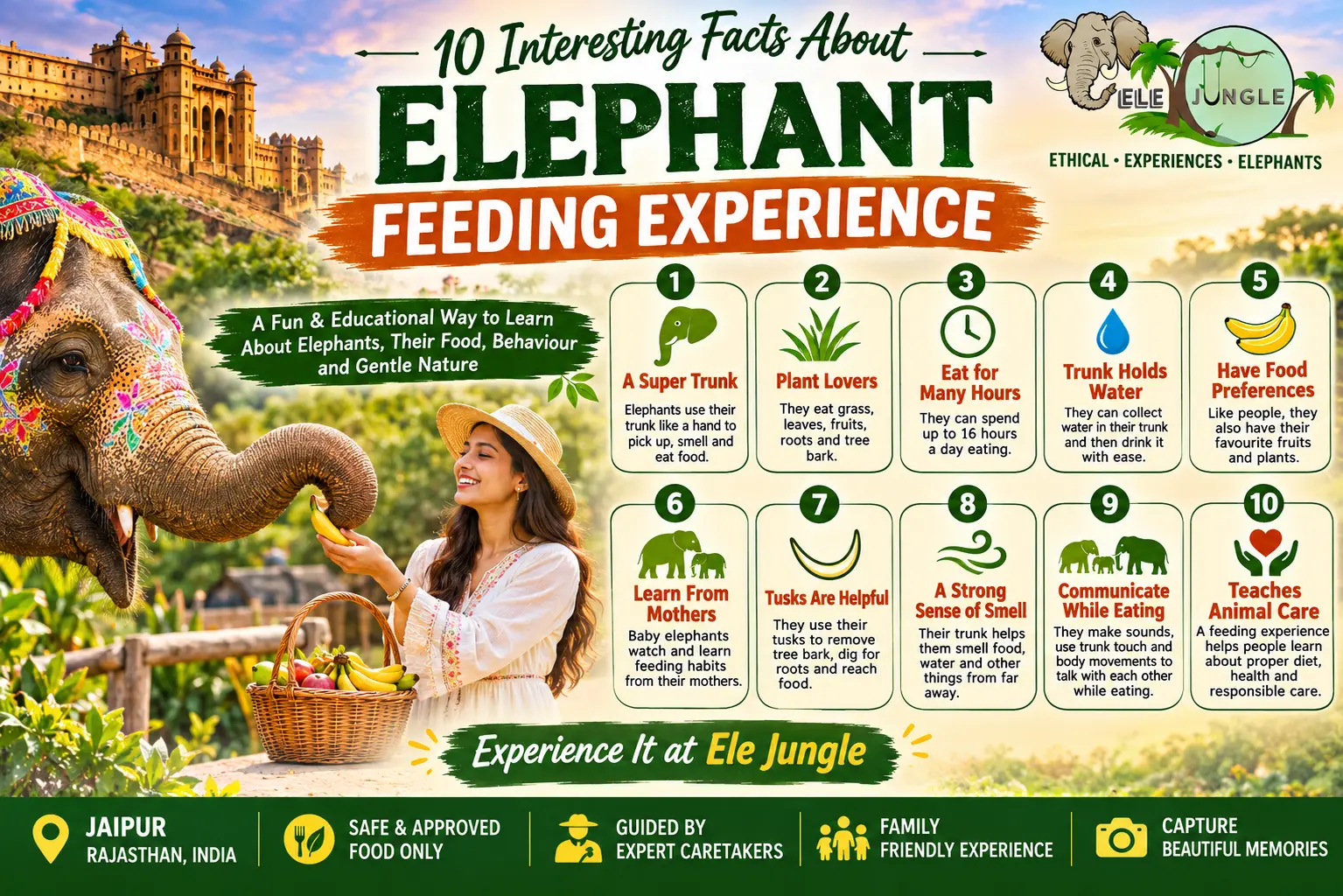
These 10 interesting facts about elephant feeding experience explain their food habits, feeding behaviour, intelligence, and the importance of safe and caring animal experiences.
Watching an elephant eat is a wonderful learning experience. You can understand how these animals find food, what they like to eat and how they use their bodies.
An elephant feeding experience also gives visitors a chance to learn about animal care. With trained guides and proper safety rules, visitors can understand the daily needs of elephants.
Let's explore 10 interesting facts that will help you learn more about these amazing animals.
1. Elephants Use Their Trunks Like Their Hands
One of the most interesting things about elephants is their trunk. It works like a hand, nose and drinking tool. Elephants use their trunks to pick up food and bring it towards their mouths.
Their trunks are very strong but also very gentle. An elephant can use its trunk to pick up large branches and small pieces of food.
During an elephant feeding experience, visitors can watch how an elephant moves its trunk. It can smell the food, hold it and place it inside its mouth.
Interesting Fact: An elephant's trunk has tens of thousands of muscle units. This helps it make many different movements.
|
|
|
|
|
|
|
|
|
|
|
|
|
|
|
|
|
|
Why Is This Interesting?
The trunk is one of the most useful parts of an elephant's body. Watching it work during feeding can help visitors understand how clever these animals are.
2. Elephants Eat Many Different Types of Food
Elephants are herbivores. This means they mainly eat plants and plant-based food. Their natural diet includes grass, leaves, fruits, roots, bark and small branches.
They need a large amount of food because their bodies are very big. Their food can also change with the season and the plants available in their habitat.
During a feeding session, visitors may see elephants eating food selected by their animal-care team. The food given during a managed experience can be different from the food elephants find in the wild.
|
|
|
|
|
|
|
|
|
|
|
|
|
|
|
|
|
|
Important: Not every fruit or vegetable is suitable for every elephant. Visitors should only offer food approved by the animal-care team.
3. Elephants Can Spend Many Hours Eating Every Day
Have you ever wondered how much time elephants spend eating?
Elephants need a lot of food to support their large bodies. They can spend up to 16 hours a day searching for and eating food.
In the wild, elephants move from one place to another to find fresh plants, grass, fruits and leaves.
Their feeding time depends on the weather, food supply and their surroundings.
During an elephant feeding experience, visitors get a small look at this important part of their daily life.
|
|
|
|
|
|
|
|
|
|
|
|
|
|
|
|
|
|
Why Does This Matter?
Eating is a major part of an elephant's daily routine. It helps visitors understand why good food and proper care are important for these animals.
4. Elephants Can Hold Water Inside Their Trunks
An elephant's trunk is not only used for eating. It also helps the animal drink water.
An elephant pulls water into its trunk and then moves the water into its mouth. It does not normally drink by sucking water directly through its trunk into its throat.
This is an amazing thing to watch because the trunk works like a natural water container.
Elephants need plenty of water to stay healthy. A large elephant can drink around 100 to 200 litres of water in a day, depending on its size, weather and activity.
|
|
|
|
|
|
|
|
|
|
|
|
|
|
|
Interesting Fact: Elephants can also use their trunks as snorkels when swimming in deep water.
5. Elephants Have Their Own Food Preferences
Just like people, elephants can show different food preferences.
Some elephants may enjoy certain fruits, while others may prefer leaves, grass or other plants. Their choices can depend on their age, health, experience and the food available around them.
Elephants also learn about food from their mothers and other members of their herd.
During a supervised feeding session, visitors may notice that an elephant smells the food before picking it up. It may also choose how to hold and eat the food.
|
|
|
|
|
|
|
|
|
|
|
|
|
|
|
|
|
|
Remember: Never assume that an elephant can eat every food item offered by a visitor. Always follow the instructions of trained animal-care staff.
6. Baby Elephants Learn Feeding Habits From Their Mothers
Baby elephants learn many important things from their mothers and other older elephants.
They watch how adults find food, use their trunks and move around their habitat. These lessons help young elephants understand which plants are useful and how to find food.
Baby elephants are not born with full control of their trunks. They need time and practice to learn how to use them properly.
A young elephant may sometimes move its trunk in a funny way while learning.
|
|
|
|
|
|
|
|
|
|
|
|
|
|
|
|
|
|
Why Is This Special?
Elephants have strong family relationships. Their young ones learn important life skills by staying close to their mothers and herd.
7. Elephants Use Their Tusks to Help Find Food
Many people think elephant tusks are only used for protection. However, tusks can also help elephants find and collect food.
Elephants may use their tusks to remove tree bark, dig for roots and move branches. This helps them reach food that may be difficult to collect with their trunks alone.
Tusks are actually long teeth. Not all elephants have large visible tusks. In Asian elephants, large tusks are mainly found in males, while females usually have much smaller tusks or no visible tusks.
|
|
|
|
|
|
|
|
|
|
|
|
|
|
|
|
|
|
Interesting Fact: Elephants use both their trunks and tusks to collect different types of food.
8. Elephants Have a Very Strong Sense of Smell
Elephants have a very good sense of smell. Their trunks help them smell food, water and other things around them.
Before eating, an elephant may move its trunk towards the food and smell it. This helps the animal explore what is in front of it.
Their sense of smell also helps them find water and understand their surroundings.
During a feeding experience, watch how the elephant moves its trunk before taking food. This small action can tell you a lot about how elephants explore the world.
|
|
|
|
|
|
|
|
|
|
|
|
|
|
|
Why Is It Amazing?
An elephant does not only use its eyes to understand the world. Its trunk also helps it collect important information through smell.
9. Elephants Communicate While Eating
Elephants are social animals. They live in groups and communicate with each other in many ways.
They use sounds, body movements, touch and smells to share information.
You may see elephants standing near each other while eating. They may also touch one another with their trunks.
Elephants can make low sounds called rumbles. Some of these sounds are so low that people cannot hear them easily.
Their body movements also help other elephants understand how they feel.
|
|
|
|
|
|
|
|
|
|
|
|
|
|
|
|
|
|
What Can Visitors Learn?
Watching elephants together helps visitors understand that feeding is not only about food. It is also part of their social life.
10. Elephant Feeding Experiences Can Teach People About Animal Care
An elephant feeding experience can be more than an activity for taking photographs. It can also help visitors learn about animal behaviour, food habits and responsible care.
A good experience should have trained staff, proper safety rules and a clear focus on the elephant's welfare.
Visitors should learn why elephants need a healthy diet, clean water, enough space and proper medical care.
At Ele Jungle, visitors should be encouraged to understand the animals before taking part in any activity. It is important to promote respectful behaviour and responsible animal interaction.
|
|
|
|
|
|
|
|
|
|
|
|
|
|
|
|
|
|
The Biggest Lesson: A meaningful elephant experience should put the animal's health and comfort first.
What Can You Expect During an Elephant Feeding Experience?
An elephant feeding experience can be an educational and memorable activity. However, every experience is different, depending on the location and animal-care rules.
Step 1: Learn About the Elephant
A trained guide can introduce visitors to the elephant. You may learn about its age, food habits, behaviour and daily needs.
Step 2: Understand Its Food
The guide can explain which foods are suitable for the elephant and why a balanced diet is important.
Step 3: Watch the Elephant Eat
You can observe how the elephant uses its trunk to pick up and eat food.
Step 4: Learn About Elephant Behaviour
You may notice how the elephant smells food, moves its ears and communicates with other elephants.
Step 5: Follow Safety Instructions
Always listen to the guide. Do not touch, feed or approach an elephant unless the animal-care team clearly allows it.
Why Is an Elephant Feeding Experience Special for Children?
Children love learning about animals. An elephant feeding experience can help them understand wildlife in a more interesting way.
Instead of only reading about elephants in books, children can observe their real behaviour.
Here are five things children can learn:
- Animal food habits: They can understand what elephants eat.
- Body parts: They can learn how an elephant uses its trunk.
- Animal behaviour: They can watch how elephants move and communicate.
- Wildlife protection: They can understand why animals need care.
- Respect for nature: They can learn why wild animals should not be disturbed.
Parents should always check age limits, supervision rules and safety instructions before booking an experience.
Tips for Enjoying an Elephant Feeding Experience
If you are planning an elephant feeding experience, a little preparation can make your visit more enjoyable.
- Listen carefully to the animal-care team.
- Wear comfortable clothes and shoes.
- Keep your phone and camera ready.
- Never shout or make sudden movements.
- Do not bring your own food for the elephant.
- Feed the elephant only if the guide allows it.
- Do not pull its trunk, ears or tail.
- Keep children close to their parents.
- Respect the elephant's space.
- Avoid flash photography if it disturbs the animal.
A responsible visit is not only about getting good photographs. It is also about understanding and respecting these wonderful animals.
How to Choose a Responsible Elephant Feeding Experience?
Not every elephant activity follows the same animal-care standards. Visitors should check the facility before making a booking.
Look for these important points:
|
|
|
|
|
|
|
|
|
|
|
|
|
|
|
|
|
|
|
|
|
A good animal experience should not force elephants to perform, accept unwanted touching or interact with visitors when they need rest.
Also remember that feeding an elephant does not automatically mean an activity supports conservation. Ask how the facility cares for its animals and where the money from visitor activities goes.
Future of Elephant Feeding Experiences
The future of elephant feeding experiences should focus more on animal welfare, education and responsible tourism.
People are becoming more interested in learning about animals and their natural behaviour. They also want to know how wildlife activities affect animal health.
Here are 10 important developments that may shape future elephant experiences.
1. More Focus on Animal Welfare
Future experiences should give more importance to the health and comfort of elephants. Animal welfare should always come before visitor entertainment.
2. Better Food and Nutrition Plans
Animal-care teams can use expert advice to prepare suitable diets. Food plans may also change according to an elephant's age and health.
3. More Educational Experiences
Visitors may get more opportunities to learn about elephant trunks, food habits, communication and family behaviour.
4. Greater Use of Technology
Digital screens, videos and educational displays may help visitors understand elephant behaviour without disturbing the animals.
5. Better Wildlife Photography
Visitors may have more opportunities to take photographs from safe viewing areas. This can help protect elephants from unwanted contact.
6. More Awareness About Asian Elephants
Educational activities may explain the special features, habitat and conservation needs of Asian elephants.
7. Improved Veterinary Care
Regular health checks and expert veterinary support will remain important for elephants living in human care.
8. More Responsible Tourism
Visitors may become more careful about choosing animal experiences. They may prefer places that clearly explain their animal-welfare practices.
9. Better Training for Animal-Care Teams
Training can help staff understand elephant body language, feeding needs and signs of discomfort.
10. More Conservation Education
Future experiences can help people understand habitat loss, human-elephant conflict and the importance of protecting elephants in the wild.
The future goal should be simple: Make every elephant experience more educational, responsible and respectful towards animals.
Why Choose Ele Jungle for an Elephant Experience?
An elephant experience can create beautiful memories and teach visitors many things about these amazing animals.
Ele Jungle can make this experience more meaningful by helping visitors understand elephant food habits, behaviour and daily care.
Visitors should always receive clear information about the activity, safety rules and animal-welfare practices before taking part.
The main purpose should be to create a learning experience where people can enjoy observing elephants while respecting their needs.
If you are planning an elephant experience, learn about the activity, follow the guide's instructions and make responsible choices.
Frequently Asked Questions About Elephant Feeding Experience
1. What happens during an elephant feeding experience?
During an elephant feeding experience, visitors can learn about elephant food habits and behaviour. Depending on the facility, they may watch an elephant eat or offer approved food under trained staff supervision. Visitors can also learn how elephants use their trunks, smell food and communicate. Every activity should follow proper safety and animal-welfare rules.
2. What food do elephants eat during a feeding experience?
Elephants mainly eat plant-based food such as grass, leaves, fruits, roots and tree bark. During managed feeding activities, the animal-care team selects suitable food based on the elephant's health and diet. Visitors should never bring their own food. Only approved food should be offered, and the guide must explain the correct feeding process.
3. Can visitors feed elephants with their hands?
Some facilities may allow visitors to offer approved food under trained staff supervision. However, not every elephant activity allows direct feeding. Rules depend on the elephant, its health and the facility's safety policy. Visitors should never put their hands near an elephant's mouth without clear instructions from qualified animal-care staff.
4. How much food does an elephant eat every day?
An elephant needs a large amount of food to support its body. An adult elephant may eat around 100 to 150 kilograms of food daily, although its needs can vary. Its diet includes grass, leaves, fruits, roots and bark. The amount depends on its size, habitat, health and available food supply.
5. Why do elephants use their trunks while eating?
Elephants use their trunks to smell, collect and hold food. Their trunks work like flexible hands and help them pick up both large and small food items. An elephant can also use its trunk to drink water and explore objects. Watching these movements during feeding helps visitors understand how useful its trunk is.
6. Is an elephant feeding experience safe for children?
An elephant feeding experience can be educational for children when the facility follows proper safety rules. Children should stay with their parents and listen to trained staff. Some facilities may have age or height limits. Parents should check these rules before booking. Direct contact should never happen without clear permission from the animal-care team.
7. What is the best time to enjoy an elephant feeding experience?
The best time depends on the facility's schedule and the elephant's daily routine. Some activities take place in the morning, while others may be available later in the day. Visitors should check the available timings before booking. The activity should always respect the elephant's feeding, resting and health needs.
8. Can I take photographs during an elephant feeding experience?
Many facilities allow visitors to take photographs during supervised elephant activities. However, visitors should follow photography rules and avoid using flash if it disturbs the animal. Keep a safe distance and never move closer just to get a better picture. Always ask the guide before taking photographs during direct feeding activities.
9. Why is an elephant feeding experience educational?
An elephant feeding experience helps visitors understand how elephants eat, drink and use their trunks. It can also teach people about their natural diet, social behaviour and daily needs. Children and adults can learn why animal welfare matters. A good experience shares useful knowledge while keeping the elephant's health and comfort first.
10. How can I choose a responsible elephant feeding experience?
Choose a facility that provides proper animal care, trained staff, suitable food and clear safety rules. Check whether elephants have enough space, veterinary support and opportunities to show natural behaviour. Ask how visitor activities are managed and whether feeding is optional for the animal. Avoid activities that force unwanted interaction or tricks.
Final Thoughts
An elephant feeding experience is a wonderful opportunity to learn about one of the world's most intelligent animals. From using their trunks to picking up food to communicating with other elephants, these gentle giants have many interesting habits.
These 10 facts help visitors understand that elephants need more than food. They also need clean water, proper care, enough space and a healthy environment.
When planning an elephant experience with Ele Jungle, visitors should learn about the animals, follow safety rules and respect their natural behaviour.
The best experience is one where visitors gain knowledge and elephants receive the care and respect they deserve.
Let's Visit the Farm
We are delighted that you reached here.
Please share your queries with us regarding the booking slots.